您现在的位置是:首页 > cms教程 > WordPress教程WordPress教程
wordpress密码生成与登录密码验证的方法
 冷卉2025-03-16WordPress教程已有人查阅
导读一。研究wordpress时wordpess的密码密码生成与登录密码验证方式很重要WordPress密码已成为整合的首要目标,如何征服整合,就得了解WordPress密码算法。
一。研究wordpress时wordpess的密码密码生成与登录密码验证方式很重要WordPress密码已成为整合的首要目标,如何征服整合,就得了解WordPress密码算法。
WordPress系统的用户密码是保存在wp_users数据表的user_pass字段,密码是通过Portable PHP password hashing framework类产生的,密码的形式是随机且不可逆,同一个明文的密码在不同时间,产生的密文也不一样,相对来说较为安全。
二。密码生成方式
> 随机产生一个salt 并将salt和password相加
> 进行了count次md5 然后和encode64的hash数值累加
> 之后得到一个以$P$开头的密码,这个密码每次产生的结果都不一样
以下为在wordpress中调用密码生成的代码
wordpress中位置为\wp-includes\class-phpass.php
以下是wordpress中生成密码的代码直接运行可查看密码的生成以及验证过程
备注:由于csdn代码显示插件对特殊字符的限制。 请将以上代码中 XXXXX替换为 $' 注意有单引号,代码中一共有5处。


WordPress系统的用户密码是保存在wp_users数据表的user_pass字段,密码是通过Portable PHP password hashing framework类产生的,密码的形式是随机且不可逆,同一个明文的密码在不同时间,产生的密文也不一样,相对来说较为安全。
二。密码生成方式
> 随机产生一个salt 并将salt和password相加
> 进行了count次md5 然后和encode64的hash数值累加
> 之后得到一个以$P$开头的密码,这个密码每次产生的结果都不一样
以下为在wordpress中调用密码生成的代码
<?php
$password = 'abc';
global $wp_hasher;
if ( empty($wp_hasher) ) {
require_once( './wp-includes/class-phpass.php');
$wp_hasher = new PasswordHash(8, TRUE);
}
echo $wp_hasher->HashPassword($password);
?>
三。wordpress密码生成与登录验证wordpress中位置为\wp-includes\class-phpass.php
以下是wordpress中生成密码的代码直接运行可查看密码的生成以及验证过程
<?php
class PasswordHash {
var $itoa64;
var $iteration_count_log2;
var $portable_hashes;
var $random_state;
function PasswordHash($iteration_count_log2, $portable_hashes)
{
$this->itoa64 = './0123456789ABCDEFGHIJKLMNOPQRSTUVWXYZabcdefghijklmnopqrstuvwxyz';
if ($iteration_count_log2 < 4 || $iteration_count_log2 > 31)
$iteration_count_log2 = 8;
$this->iteration_count_log2 = $iteration_count_log2;
$this->portable_hashes = $portable_hashes;
$this->random_state = microtime() . uniqid(rand(), TRUE); // removed getmypid() for compability reasons
}
function get_random_bytes($count)
{
$output = '';
if ( @is_readable('/dev/urandom') &&
($fh = @fopen('/dev/urandom', 'rb'))) {
$output = fread($fh, $count);
fclose($fh);
}
if (strlen($output) < $count) {
$output = '';
for ($i = 0; $i < $count; $i += 16) {
$this->random_state =
md5(microtime() . $this->random_state);
$output .=
pack('H*', md5($this->random_state));
}
$output = substr($output, 0, $count);
}
return $output;
}
function encode64($input, $count)
{
$output = '';
$i = 0;
do {
$value = ord($input[$i++]);
$output .= $this->itoa64[$value & 0x3f];
if ($i < $count)
$value |= ord($input[$i]) << 8;
$output .= $this->itoa64[($value >> 6) & 0x3f];
if ($i++ >= $count)
break;
if ($i < $count)
$value |= ord($input[$i]) << 16;
$output .= $this->itoa64[($value >> 12) & 0x3f];
if ($i++ >= $count)
break;
$output .= $this->itoa64[($value >> 18) & 0x3f];
} while ($i < $count);
return $output;
}
function gensalt_private($input)
{
$output = '$PXXXXX;
$output .= $this->itoa64[min($this->iteration_count_log2 +
((PHP_VERSION >= '5') ? 5 : 3), 30)];
$output .= $this->encode64($input, 6);
return $output;
}
function crypt_private($password, $setting)
{
$output = '*0';
if (substr($setting, 0, 2) == $output)
$output = '*1';
$id = substr($setting, 0, 3);
# We use "$P{1}quot;, phpBB3 uses "$H{1}quot; for the same thing
if ($id != '$PXXXXX && $id != '$HXXXXX)
return $output;
$count_log2 = strpos($this->itoa64, $setting[3]);
if ($count_log2 < 7 || $count_log2 > 30)
return $output;
$count = 1 << $count_log2;
$salt = substr($setting, 4, 8);
if (strlen($salt) != 8)
return $output;
# We're kind of forced to use MD5 here since it's the only
# cryptographic primitive available in all versions of PHP
# currently in use. To implement our own low-level crypto
# in PHP would result in much worse performance and
# consequently in lower iteration counts and hashes that are
# quicker to crack (by non-PHP code).
if (PHP_VERSION >= '5') {
$hash = md5($salt . $password, TRUE);
do {
$hash = md5($hash . $password, TRUE);
} while (--$count);
} else {
$hash = pack('H*', md5($salt . $password));
do {
$hash = pack('H*', md5($hash . $password));
} while (--$count);
}
$output = substr($setting, 0, 12);
$output .= $this->encode64($hash, 16);
return $output;
}
function gensalt_extended($input)
{
$count_log2 = min($this->iteration_count_log2 + 8, 24);
# This should be odd to not reveal weak DES keys, and the
# maximum valid value is (2**24 - 1) which is odd anyway.
$count = (1 << $count_log2) - 1;
$output = '_';
$output .= $this->itoa64[$count & 0x3f];
$output .= $this->itoa64[($count >> 6) & 0x3f];
$output .= $this->itoa64[($count >> 12) & 0x3f];
$output .= $this->itoa64[($count >> 18) & 0x3f];
$output .= $this->encode64($input, 3);
return $output;
}
function gensalt_blowfish($input)
{
# This one needs to use a different order of characters and a
# different encoding scheme from the one in encode64() above.
# We care because the last character in our encoded string will
# only represent 2 bits. While two known implementations of
# bcrypt will happily accept and correct a salt string which
# has the 4 unused bits set to non-zero, we do not want to take
# chances and we also do not want to waste an additional byte
# of entropy.
$itoa64 = './ABCDEFGHIJKLMNOPQRSTUVWXYZabcdefghijklmnopqrstuvwxyz0123456789';
$output = '$2aXXXXX;
$output .= chr(ord('0') + $this->iteration_count_log2 / 10);
$output .= chr(ord('0') + $this->iteration_count_log2 % 10);
$output .= 'XXXXX;
$i = 0;
do {
$c1 = ord($input[$i++]);
$output .= $itoa64[$c1 >> 2];
$c1 = ($c1 & 0x03) << 4;
if ($i >= 16) {
$output .= $itoa64[$c1];
break;
}
$c2 = ord($input[$i++]);
$c1 |= $c2 >> 4;
$output .= $itoa64[$c1];
$c1 = ($c2 & 0x0f) << 2;
$c2 = ord($input[$i++]);
$c1 |= $c2 >> 6;
$output .= $itoa64[$c1];
$output .= $itoa64[$c2 & 0x3f];
} while (1);
return $output;
}
function HashPassword($password)
{
$random = '';
if (CRYPT_BLOWFISH == 1 && !$this->portable_hashes) {
$random = $this->get_random_bytes(16);
$hash =
crypt($password, $this->gensalt_blowfish($random));
if (strlen($hash) == 60)
return $hash;
}
if (CRYPT_EXT_DES == 1 && !$this->portable_hashes) {
if (strlen($random) < 3)
$random = $this->get_random_bytes(3);
$hash =
crypt($password, $this->gensalt_extended($random));
if (strlen($hash) == 20)
return $hash;
}
if (strlen($random) < 6)
$random = $this->get_random_bytes(6);
$hash =
$this->crypt_private($password,
$this->gensalt_private($random));
if (strlen($hash) == 34)
return $hash;
# Returning '*' on error is safe here, but would _not_ be safe
# in a crypt(3)-like function used _both_ for generating new
# hashes and for validating passwords against existing hashes.
return '*';
}
function CheckPassword($password, $stored_hash)
{
$hash = $this->crypt_private($password, $stored_hash);
if ($hash[0] == '*')
$hash = crypt($password, $stored_hash);
return $hash == $stored_hash;
}
}
//原始密码
$passwordValue = "123456";
//生成密码
$wp_hasher = new PasswordHash(8, TRUE);
$sigPassword = $wp_hasher->HashPassword($passwordValue);
echo "生成的密码为:".$sigPassword;
echo "\n";
//验证密码
$data = $wp_hasher->CheckPassword($passwordValue,$sigPassword);
if($data){
echo '密码正确';
}else{
echo '密码错误';
}
?>
此为一个wordpres密码生成与登录验证实例,其中HashPassword为生成密码,CheckPassword为验证密码itoa64 = './0123456789ABCDEFGHIJKLMNOPQRSTUVWXYZabcdefghijklmnopqrstuvwxyz'; 为以上提到的生成salt的基础字符串。备注:由于csdn代码显示插件对特殊字符的限制。 请将以上代码中 XXXXX替换为 $' 注意有单引号,代码中一共有5处。
感谢您的认可和支持
微信
支付宝
本文标签:
很赞哦! ()
图文教程

Wordpress数据库表的用途作用说明
以下是在WordPress3.0版本标准安装过程中所创建的数据库表的大纲和描述。目前,WordPress3.0仅支持 MySQL 4.1.2及更高版本的数据库。由于WordPress自己与数据库接口,作为终端
实现WordPress注册完用户才可以看文章的方法
在WordPress中,可以给每篇日志设置单独的密码,然后通过其他方式发送给特定的用户,这个功能本来比较人性化了,但是对于用户转化没有任何好处
wordpress更换域名的步骤教程
不管是个人网站还是企业网站,一般我们都不建议更换网站域名,因为这不但会影响网站在搜索引擎结果中的排名,减少网站的访问量
thinkphp和wordpress有什么区别
简言之,thinkphp和wordpress区别就是:一个是博客系统,功能都是现成的直接使用。一个是框架,提供基本构架,功能很少,做后期开发的。
相关源码
-
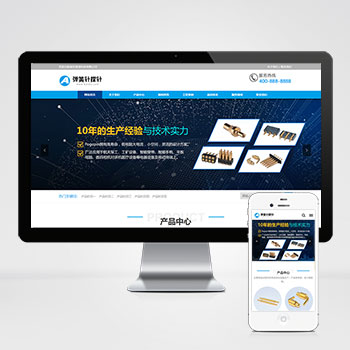 (PC+WAP)蓝色弹簧针厂家探针充电连接器设备网站源码下载基于PbootCMS开发的响应式模板,为弹簧针、探针连接器等电子元器件企业设计。模板采用工业蓝主色调,突出产品技术特性,支持多维度展示连接器产品的规格参数与应用场景,帮助制造企业建立专业线上展示平台。查看源码
 -
 (PC+WAP)家居装饰家装建材营销型网站pbootcms模板下载本模板基于PbootCMS开发,主要服务于家居装饰、建材及相关行业。采用现代化设计风格,同时适配PC和移动设备访问。模板结构清晰,突出展示家装案例和建材产品,帮助企业在线上建立专业形象,有效展示产品与服务优势。查看源码
 -
 (自适应)高端集团跨国公司产业联盟机构网站模板免费下载基于PbootCMS内核开发的集团级企业网站模板,采用响应式设计架构,确保在各类移动设备上获得浏览体验。通过模块化布局与简约大气的视觉风格,帮助集团企业高效展示组织架构、发展历程和业务矩阵,建立专业的企业形象窗口。查看源码
 -
 (自适应)蓝色自动溶剂萃取仪器设备类网站pbootcms模板下载本模板为溶剂萃取设备、实验室仪器等精密仪器行业设计,采用PbootCMS内核开发,具有高度专业性和行业适配性。模板设计充分考虑了仪器设备行业展示需求,能够呈现各类精密仪器的技术参数、应用场景和解决方案。查看源码
 -
 (PC+WAP)玻璃钢不锈钢钢材环保设备pbootcms网站模板采用PbootCMS内核开发的响应式网站模板,为玻璃钢环保设备制造、不锈钢钢材贸易企业设计,适配产品展示及企业服务场景。通过自适应技术实现PC与WAP端数据实时同步查看源码
 -
 pbootcms响应式蓝色旅游旅行社pbootcms网站源码下载为旅游公司、旅行社定制的响应式网站模板,聚焦旅游线路展示、景点推荐及预约服务场景。采用PbootCMS内核开发,自适应技术确保PC与手机端数据实时同步查看源码
| 分享笔记 (共有 篇笔记) |