您现在的位置是:首页 > cms教程 > phpcms教程phpcms教程
PHPCMS源码引擎分析
 含烟2025-05-21phpcms教程已有人查阅
导读如:调用单页面index.php?m=content&c=index&a=lists&catid=9.1.先获取到模版变量的值$template_list="list";然后通过$type!=0来判断是单页面,
一、模版引擎
如:调用单页面index.php?m=content&c=index&a=lists&catid=9.
1.先获取到模版变量的值$template_list="list";然后通过$type!=0来判断是单页面,
然后通过$template = $setting['page_template'] ? $setting['page_template'] : 'page';获取单页免的模版page.html.
2.引入模版include template('content',$template);
3.查看template()函数:定义在/phpcms/libs/functions/global.func.php.
(1)module;
(2)模版,比如单页面page.html;
(3)模版风格,就是/phpcms/templates/下面的目录名,比如default,che.
该函数实现的功能:
(1)通过file_exists($compiledtplfile):判断模版编译文件是否存在;
(2)通过filemtime()判断模版文件的生成时间是否大于模版编译文件;
以上两点如果(||连接)为真,则通过$template_cache->template_compile($module, $template, $style);编译模版文件;
4.查看template_compile()函数:定义在/phpcms/libs/classes/template_cache.class.php.
(同上)
该函数实现的功能:
(1)通过$content = @file_get_contents ( $tplfile );读取模版源文件的内容;
(2)通过$content = $this->template_parse($content);正则匹配替换掉标签,将标签替换为php代码:
(3)通过$strlen = file_put_contents ( $compiledtplfile, $content );将替换后的字符串写入模版编译文件;
(4)返回$strlen,即用include template('content',$template);将$strlen引入到控制器代码里。其本质就是php和html代码混编。
5.模版解析:通过template_parse($str)用正则替换标签。
2.\1 \2分组的使用;
3.替换为self::pc_tag函数的使用。
二、框架实现思路(参考:http:// .tuicool.com/articles/BvU3i2v)
通过单一入口的pc_base::create_app()来创建一个应用,调用不同的类库处理不同的应用;
当处理application时:调用框架类库文件下的application.class.php文件,执行构造函数,加载param路由类,使用路由类中的
$param->route_m(),$param->route_c(),$param->route_a()获取模块和控制器以及方法,route_m为模块,在modules文件下,然后是控制器和方法,标准的mvc结构。然后执行int函数,执行load_controller加载获取到的控制器并且实例化!
三、外部引用来调用phpcms的类库
1.三大类
mysql.class.php 数据库实现类 :final class mysql;
db_factory.class.php 数据库工厂类 :final class db_factory;
model.class.php 数据模型基类 :class model。
2.实现流程(/phpcms/libs/class/)
(1)mysql.class.php提供数据库连接、查询、执行等各种实现方法;


如:调用单页面index.php?m=content&c=index&a=lists&catid=9.
1.先获取到模版变量的值$template_list="list";然后通过$type!=0来判断是单页面,
然后通过$template = $setting['page_template'] ? $setting['page_template'] : 'page';获取单页免的模版page.html.
2.引入模版include template('content',$template);
3.查看template()函数:定义在/phpcms/libs/functions/global.func.php.
template($module = 'content', $template = 'index', $style = '');
传入的三个参数分别是:(1)module;
(2)模版,比如单页面page.html;
(3)模版风格,就是/phpcms/templates/下面的目录名,比如default,che.
该函数实现的功能:
(1)通过file_exists($compiledtplfile):判断模版编译文件是否存在;
(2)通过filemtime()判断模版文件的生成时间是否大于模版编译文件;
以上两点如果(||连接)为真,则通过$template_cache->template_compile($module, $template, $style);编译模版文件;
4.查看template_compile()函数:定义在/phpcms/libs/classes/template_cache.class.php.
template_compile($module, $template, $style = 'default');
传入的三个参数分别是:(同上)
该函数实现的功能:
(1)通过$content = @file_get_contents ( $tplfile );读取模版源文件的内容;
(2)通过$content = $this->template_parse($content);正则匹配替换掉标签,将标签替换为php代码:
(3)通过$strlen = file_put_contents ( $compiledtplfile, $content );将替换后的字符串写入模版编译文件;
(4)返回$strlen,即用include template('content',$template);将$strlen引入到控制器代码里。其本质就是php和html代码混编。
5.模版解析:通过template_parse($str)用正则替换标签。
/**
* 解析模板
*
* @param $str 模板内容
* @return ture
*/
public function template_parse($str) {
$str = preg_replace ( "/\{template\s+(.+)\}/", "<?php include template(\\1); ?>", $str );
$str = preg_replace ( "/\{include\s+(.+)\}/", "<?php include \\1; ?>", $str );
$str = preg_replace ( "/\{php\s+(.+)\}/", "<?php \\1?>", $str );
$str = preg_replace ( "/\{if\s+(.+?)\}/", "<?php if(\\1) { ?>", $str );
$str = preg_replace ( "/\{else\}/", "<?php } else { ?>", $str );
$str = preg_replace ( "/\{elseif\s+(.+?)\}/", "<?php } elseif (\\1) { ?>", $str );
$str = preg_replace ( "/\{\/if\}/", "<?php } ?>", $str );
//for 循环
$str = preg_replace("/\{for\s+(.+?)\}/","<?php for(\\1) { ?>",$str);
$str = preg_replace("/\{\/for\}/","<?php } ?>",$str);
//++ --
$str = preg_replace("/\{\+\+(.+?)\}/","<?php ++\\1; ?>",$str);
$str = preg_replace("/\{\-\-(.+?)\}/","<?php ++\\1; ?>",$str);
$str = preg_replace("/\{(.+?)\+\+\}/","<?php \\1++; ?>",$str);
$str = preg_replace("/\{(.+?)\-\-\}/","<?php \\1--; ?>",$str);
$str = preg_replace ( "/\{loop\s+(\S+)\s+(\S+)\}/", "<?php \$n=1;if(is_array(\\1)) foreach(\\1 AS \\2) { ?>", $str );
$str = preg_replace ( "/\{loop\s+(\S+)\s+(\S+)\s+(\S+)\}/", "<?php \$n=1; if(is_array(\\1)) foreach(\\1 AS \\2 => \\3) { ?>", $str );
$str = preg_replace ( "/\{\/loop\}/", "<?php \$n++;}unset(\$n); ?>", $str );
$str = preg_replace ( "/\{([a-zA-Z_\x7f-\xff][a-zA-Z0-9_\x7f-\xff:]*\(([^{}]*)\))\}/", "<?php echo \\1;?>", $str );
$str = preg_replace ( "/\{\\$([a-zA-Z_\x7f-\xff][a-zA-Z0-9_\x7f-\xff:]*\(([^{}]*)\))\}/", "<?php echo \\1;?>", $str );
$str = preg_replace ( "/\{(\\$[a-zA-Z_\x7f-\xff][a-zA-Z0-9_\x7f-\xff]*)\}/", "<?php echo \\1;?>", $str );
$str = preg_replace("/\{(\\$[a-zA-Z0-9_\[\]\'\"\$\x7f-\xff]+)\}/es", "\$this->addquote('<?php echo \\1;?>')",$str);
$str = preg_replace ( "/\{([A-Z_\x7f-\xff][A-Z0-9_\x7f-\xff]*)\}/s", "<?php echo \\1;?>", $str );
$str = preg_replace("/\{pc:(\w+)\s+([^}]+)\}/ie", "self::pc_tag('$1','$2', '$0')", $str);
$str = preg_replace("/\{\/pc\}/ie", "self::end_pc_tag()", $str);
$str = "<?php defined('IN_PHPCMS') or exit('No permission resources.'); ?>" . $str;
return $str;
}
关键点:1.\s 空格匹配的使用;2.\1 \2分组的使用;
3.替换为self::pc_tag函数的使用。
二、框架实现思路(参考:http:// .tuicool.com/articles/BvU3i2v)
通过单一入口的pc_base::create_app()来创建一个应用,调用不同的类库处理不同的应用;
当处理application时:调用框架类库文件下的application.class.php文件,执行构造函数,加载param路由类,使用路由类中的
$param->route_m(),$param->route_c(),$param->route_a()获取模块和控制器以及方法,route_m为模块,在modules文件下,然后是控制器和方法,标准的mvc结构。然后执行int函数,执行load_controller加载获取到的控制器并且实例化!
三、外部引用来调用phpcms的类库
include_once '../phpcms/base.php';//引入主文件
pc_base::load_sys_class('model', '', 0);//加载model类
class Api extends model {//继承model类,即调用model的各种数据库方法
public function __construct() {
$this->db_config = include "../config/database.php";//此处得包含进数据库配置文件
$this->db_setting = 'default';
//$this->table_name = 'admin';
parent::__construct();
}
}
$apiDb = new Api();
$adpos = isset($_GET['adpos'])&&!empty($_GET['adpos'])?$_GET['adpos']:"0";
if($adpos=="login"){
$spaceid = 25;
}elseif ($adpos=="register"){
$spaceid = 23;
}else{
$spaceid = 0;
}
$sql = "SELECT s.width,s.height,p.setting FROM `u8_poster_space` s LEFT JOIN `u8_poster` p ON s.spaceid=p.spaceid WHERE p.spaceid=$spaceid";
$res = $apiDb->db->get_ones($sql);//根据sql语句获取一行结果集
四、数据库实现原理1.三大类
mysql.class.php 数据库实现类 :final class mysql;
db_factory.class.php 数据库工厂类 :final class db_factory;
model.class.php 数据模型基类 :class model。
2.实现流程(/phpcms/libs/class/)
(1)mysql.class.php提供数据库连接、查询、执行等各种实现方法;
/**
* 真正开启数据库连接
*
* @return void
*/
public function connect() {
$func = $this->config['pconnect'] == 1 ? 'mysql_pconnect' : 'mysql_connect';
if(!$this->link = @$func($this->config['hostname'], $this->config['username'], $this->config['password'], 1)) {
$this->halt('Can not connect to MySQL server');
return false;
}
if($this->version() > '4.1') {
$charset = isset($this->config['charset']) ? $this->config['charset'] : '';
$serverset = $charset ? "character_set_connection='$charset',character_set_results='$charset',character_set_client=binary" : '';
$serverset .= $this->version() > '5.0.1' ? ((empty($serverset) ? '' : ',')." sql_mode='' ") : '';
$serverset && mysql_query("SET $serverset", $this->link);
}
if($this->config['database'] && !@mysql_select_db($this->config['database'], $this->link)) {
$this->halt('Cannot use database '.$this->config['database']);
return false;
}
$this->database = $this->config['database'];
return $this->link;
}
(2)db_factory.class.php用get_instance($db_config = '')方法返回当前工厂类,用get_database($db_name)方法返回数据库操作实例(它调用工厂类的connect($db_name)来实现工厂类原理),
/**
* 加载数据库驱动
* @param $db_name 数据库配置名称
* @return object
*/
public function connect($db_name) {
$object = null;
switch($this->db_config[$db_name]['type']) {
case 'mysql' :
pc_base::load_sys_class('mysql', '', 0);
$object = new mysql();
break;
case 'mysqli' :
$object = pc_base::load_sys_class('mysqli');
break;
case 'access' :
$object = pc_base::load_sys_class('db_access');
break;
default :
pc_base::load_sys_class('mysql', '', 0);
$object = new mysql();
}
$object->open($this->db_config[$db_name]);
return $object;
}
(3)model.class.php加载工厂类(pc_base::load_sys_class('db_factory', '', 0);),提供数据库的curd操作方法。
$this->db = db_factory::get_instance($this->db_config)->get_database($this->db_setting);//获取数据库实例
总结:通过工厂类的get_instance()获取当前实例,调用工厂方法的get_database()连接数据库并返回数据库操作实例,并返回给model的$this->db,之后所有方法的调用直接通过$this->db调用model里的方法即可。
感谢您的认可和支持
微信
支付宝
本文标签:
很赞哦! ()
相关教程
图文教程

PHPCMSV9静态化HTML生成设置及URL规则优化方法
最近有客户在进行网站优化的时候,具体问道Phpcms V9怎么样静态化、伪静态的问题,之前有分享过“Phpcms自定义URL规则技巧”,不过那只是原理,今天在这里
phpcmsv9无法更新url的解决方法
更换域名后更新栏目url和内容页url还是无法更新为新的域名,手动把cache文件夹下能清除的缓存文件清除了还是不行,把数据库的缓存表内容清空了还是不行
PHPCMSV9建站学习总结
在实现PHPCMS网站过程中,根据业务需求,我们遇到很多问题,特此总结如下,以便大家参考学习。【1】PHPCMS V9系统目录简析
phpcmsv9标签伪静态tag
我们在phpcms v9的内容页会发现关键词的链接真是的很复杂,而“扩展--url规则管理”里面也不能配置,这需要人工配置,配置的同时,一定要注意中文乱码问题,需要字符转换。
相关源码
-
 响应式粉色美容整形化妆品pbootcms网站模板开源源码该网站模板为美容整形、化妆品企业设计,采用响应式布局确保在手机、平板及PC端自动适配显示效果。基于PbootCMS内核开发,支持一键替换图文内容快速转换至其他行业应用。查看源码
 -
 (自适应)蓝色环保科技设备带三级栏目网站模板下载该模板为环保科技企业设计,提供专业的产品展示与技术服务平台。采用响应式布局,适配环保设备、清洁技术等应用场景,通过可视化后台可快速搭建符合行业特性的展示网站。查看源码
 -
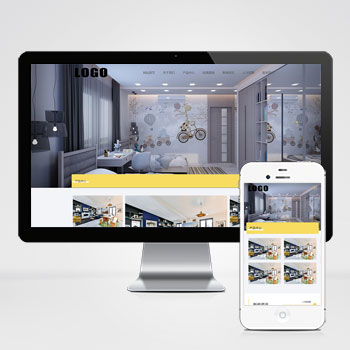 (自适应响应式)装修装潢设计公司网站源码下载本模板为装修设计企业打造,采用PbootCMS内核开发,整体设计突出空间美学与功能性结合。首页采用大图轮播展示工程案例,服务项目模块支持三维效果展示,呈现装修设计企业的专业形象与技术实力。查看源码
 -
 (PC+WAP)房屋建造建筑工程房地产建材行pbootcms网站模板下载本模板基于PbootCMS内核开发,为房屋建造、建筑工程及房地产建材类企业设计。通过本模板可快速搭建具有行业特色的企业官网,只需替换文字与图片内容即可适配其他行业使用。查看源码
 -
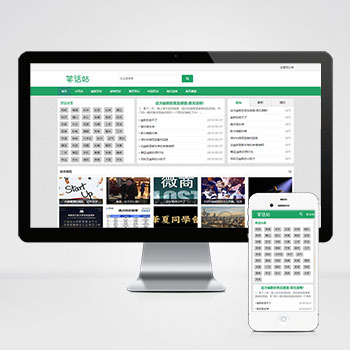 (自适应)幽默笑话脑筋急转弯搞笑趣图博客pbootcms模板下载本模板基于PbootCMS系统开发,专为幽默笑话、搞笑趣图类网站设计。采用轻松活泼的布局风格,突出娱乐内容分享特色,适合各类笑话、段子、搞笑图片等内容展示。查看源码
 -
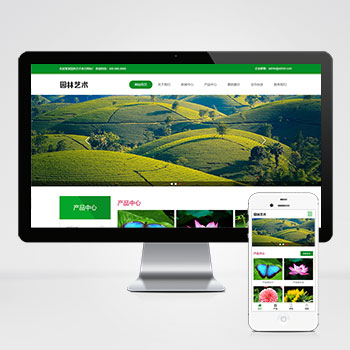 (自适应)绿色园林建筑花卉园艺艺术模板免费下载为景观设计及园艺企业打造的响应式网站框架,基于PbootCMS系统开发,帮助传统园林行业建立现代化数字展示平台。采用标准DIV+CSS前端架构,代码精简无冗余。查看源码
| 分享笔记 (共有 篇笔记) |